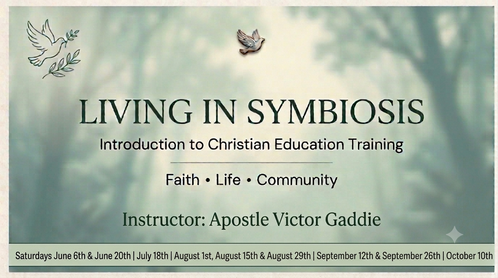
🌿🕊️ SUMMER 2026 INTENSIVE
Introduction to Christian Education Training

Dates (*UPDATED): Saturdays June 6th & June 20th | *July 18th |  *August 1st, *August 15th & August 29th | *September 12th & *September 26th | *October 10th

SESSIONS ARE VIA ZOOM(LINK PROVIDED TO STUDENTS EMAIL)

✨ What This Course Is About

Learn how to interpret Scripture deeply and responsibly—not just academically, but through your culture, community, and lived experience.

This course uniquely combines:
•📖 Inductive Bible Study (Observation–Interpretation–Application)
•🌍 African Hermeneutics (Contextual & Community-Based Reading)

🔑 What You’ll Learn

•How to read the Bible with clarity and confidence
•How culture and context shape interpretation
•How to interpret Scripture through justice, community, and real life
•How to teach and communicate Scripture effectively

📚 Core Learning Approach

You will engage Scripture using two powerful frameworks:
1. Inductive Bible Study
•What does the text say?
•What does it mean?
•How does it apply?
2. African Hermeneutics
•Where does this text meet our lives?
•What does it reveal about God in our context?
•How does community shape understanding?

🗓️ 8 Transformational Sessions

•Foundations of Biblical Interpretation
•Reading Scripture in Context
•Tools for Studying the Bible
•Community & Identity in Scripture
•Justice, Liberation & Faith
•Scripture & Society
•Teaching & Communication
•Final Practicum + Commissioning

Let’s Start From Here:
Living in Symbiosis — Faith • Life • Community
(COURSE SYNOPSIS)

Let’s Start From Here: Living in Symbiosis is a transformational certificate-track Bible study course designed to equip believers, leaders, teachers, and lifelong learners to engage Scripture with greater depth, clarity, and cultural awareness. Drawing from the disciplines of Inductive Bible Study, African Hermeneutics, and the rich tradition of African American biblical interpretation, participants will explore how faith, life, and community exist in a dynamic relationship that shapes both the way we read the Bible and the way we live its message.

Through six interactive sessions, students will learn the foundational practices of Observation, Interpretation, and Application while examining how culture, history, identity, and community influence biblical understanding. Participants will be challenged to recognize the assumptions they bring to the text, appreciate the importance of historical and cultural context, and develop a more holistic approach to interpretation that is both academically sound and spiritually transformative.

The course explores critical themes including contextual reading, biblical study methods, communal identity, justice and liberation, African and African American interpretive traditions, and the role of Scripture in personal and collective transformation. Drawing insights from scholars such as Elizabeth Mburu, Cain Hope Felder, Richard Alan Fuhr Jr., and Andreas Köstenberger, students will discover how faithful interpretation requires both careful study and thoughtful engagement with the realities of human experience.

More than a Bible study course, this learning experience is an invitation to allow Scripture not only to be read but to read us—to examine our assumptions, reshape our perspectives, and transform our lives. By the end of the course, participants will be equipped to interpret Scripture responsibly, teach biblical truths effectively, engage diverse communities with wisdom, and communicate God’s Word in ways that foster spiritual growth, justice, reconciliation, and Kingdom impact.

The course culminates in a practicum experience in which each participant demonstrates their growth through a 5–7 minute teaching or sermon presentation that integrates sound biblical interpretation, contextual awareness, and practical application.

SOMETHING TO THINK ABOUT 

People often think the greatest threat to interpretation is ignorance, when in reality the greater threat is often unexamined certainty.

The healthiest hermeneutic is not one that claims to be completely unbiased—because no interpreter is. Rather, it is one that becomes increasingly aware of its biases and intentionally submits them to Scripture, community, history, and the Spirit.

Here are some of the most significant pitfalls that repeatedly ensnare students, pastors, and scholars alike.

1. The Pitfall of Reading the Bible to Confirm What We Already Believe

This is perhaps the most subtle danger.

Instead of asking:

“What is the text saying?”

The interpreter unconsciously asks:

“How does this text support what I already think?”

This is known as eisegesis (reading into the text) rather than exegesis (drawing out of the text).

Theological systems can become echo chambers.

•Calvinists find Calvinism everywhere.
•Arminians find Arminianism everywhere.
•Pentecostals find Pentecostalism everywhere.
•Liberation theologians find liberation everywhere.
•Dispensationalists find dispensationalism everywhere.

The danger is not possessing a framework.

The danger is allowing the framework to become more authoritative than the text.

Healthy Question

“What would this passage mean if I had never heard my tradition’s interpretation of it?”


2. The Pitfall of Presentism

Presentism occurs when modern concerns are projected backward onto ancient texts.

Examples:

•Reading modern democracy into Israel.
•Reading modern capitalism into Proverbs.
•Reading modern racial categories into biblical ethnic categories.
•Reading modern psychological categories into every biblical narrative.

The biblical authors lived in worlds radically different from ours.

A healthy interpreter asks:

“What did this text mean to them before asking what it means to us?”

Observation must precede application.


3. The Pitfall of Cultural Blindness

Every interpreter has a culture.

The problem is not culture.

The problem is assuming your culture is neutral.

European theology often universalized European assumptions.

American theology often universalizes American assumptions.

African theology can universalize African assumptions.

Black theology can universalize Black experiences.

None are inherently wrong.

All are incomplete.

This is why diverse voices matter.

Listening to:

•African theologians
•Asian theologians
•Latin American theologians
•Black theologians
•Women theologians
•Church Fathers
•Contemporary scholars

helps expose blind spots.

A monocultural interpretation often becomes a distorted interpretation.


4. The Pitfall of “Proof-Text Theology”

Many students begin theology by collecting verses.

While helpful, this can become dangerous.

The Bible was not written as a dictionary of theological propositions.

It was written as:
•Narrative
•Poetry
•Wisdom
•Prophecy
•Gospel
•Epistle
•Apocalypse

When verses are removed from their literary context, they can be made to support nearly anything.

A healthy interpreter asks:

“How does this verse function in its paragraph, chapter, book, and covenant context?”


5. The Pitfall of Systematic Theology Dominating Biblical Theology

This is particularly relevant to the Loci Theologici tradition.

Systematic theology asks:

“What does the Bible teach about this topic?”

Biblical theology asks:

“How does God progressively reveal this truth throughout redemptive history?”

Problems arise when systematic categories flatten the biblical story.

For example:

A student may study “salvation” without understanding:

•Creation
•Fall
•Covenant
•Exodus
•Kingdom
•Exile
•Messiah
•New Creation

The healthiest theology moves from narrative to doctrine, not merely doctrine to narrative.


6. The Pitfall of Hero Worship

Many students become disciples of theologians rather than disciples of Christ.

Examples include excessive dependence upon:

•John Calvin
•Martin Luther
•Karl Barth
•James H. Cone
•N. T. Wright

Every theologian is a guide.

None are the destination.

The mature student learns from many voices while being enslaved to none.


7. The Pitfall of Ignoring Power Dynamics

This is one of the major contributions of Black, African, and Liberation hermeneutics.

Interpretations do not emerge in a vacuum.

Questions must be asked:

•Who benefits from this interpretation?
•Who is marginalized by this interpretation?
•Who historically controlled this interpretation?

Many theological traditions have been shaped by:

•Empire
•Colonialism
•Slavery
•Nationalism
•Class interests

This does not automatically invalidate them.

It does require examination.


8. The Pitfall of Making Experience the Final Authority

Reactionary theology often swings to the opposite extreme.

Some traditions elevate doctrine above lived experience.

Others elevate experience above Scripture.

Healthy hermeneutics refuses both extremes.

Scripture must interpret experience.

Experience must also force us to reexamine whether we have interpreted Scripture correctly.

The tension must remain.


9. The Pitfall of Fragmentation

Modern education often teaches students to analyze pieces.

Biblical thought often emphasizes wholes.

The Bible is not merely:

•Theology
•Ethics
•Sociology
•Psychology
•History

It is all of these simultaneously.

A fragmented approach produces fragmented disciples.

A holistic approach produces transformation.


10. The Pitfall of Mistaking Information for Formation

This may be the greatest danger for ministry leaders.

A student can learn:

•Greek
•Hebrew
•Hermeneutics
•Theology
•Church history

and still become spiritually malformed.

In Scripture, understanding was never merely intellectual.

Knowledge was expected to produce:

•Worship
•Obedience
•Justice
•Compassion
•Holiness
•Community

The Bible’s ultimate goal is not simply correct interpretation.

It is faithful transformation.


A Practical Hermeneutical Safeguard

One of the healthiest questions a student can ask before arriving at any major conclusion is:

The Four-Witness Test

What does the text say?
(Exegesis)

How has the Church historically understood it?
(Historical Theology)

How do believers from other cultures understand it?
(Global Theology)

How does this interpretation shape life and discipleship?
(Formational Theology)

When all four witnesses are allowed to speak, interpretation tends to become more balanced, humble, and life-giving.

The goal is to become the kind of interpreter who is humble enough to hear the text, wise enough to recognize personal and cultural blind spots, and mature enough to let Scripture reshape both belief and behavior. That is where theology ceases to be an academic exercise and becomes participation in the ongoing work of God’s Kingdom.

Session Schedule 

Session 1 — June 20, 2026
SESSION 1 — JUNE 20, 2026

Course Orientation & Introduction

Theme:
Living in Symbiosis: Faith, Life, and Community

Class Discussion

• Course overview and expectations
• Understanding biblical interpretation
• Faith, life, and community in symbiotic relationship
• Introduction to course texts
• Overview of assignments and projects

Session 2 — July 18, 2026
Book Discussion:
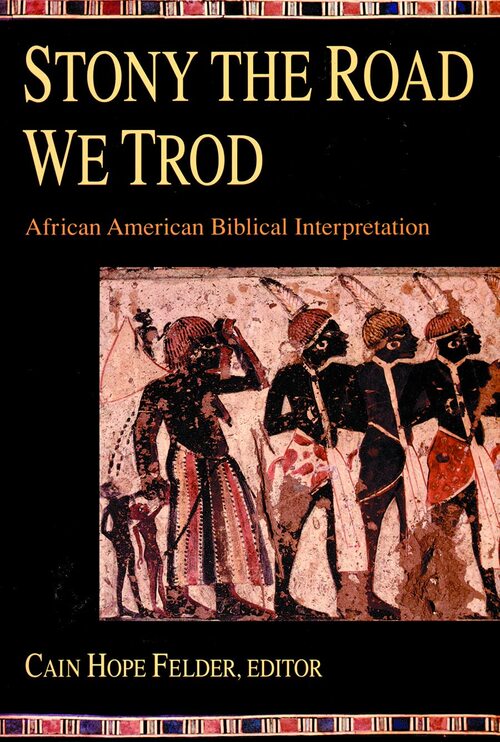
Stony the Road We Trod

Class Discussion

• African American engagement with Scripture
• Liberation and resistance
• The Black Church and biblical interpretation
• Faith and social justice
• Community-centered readings of Scripture
Session 3 — August 1, 2026
Book Discussion:
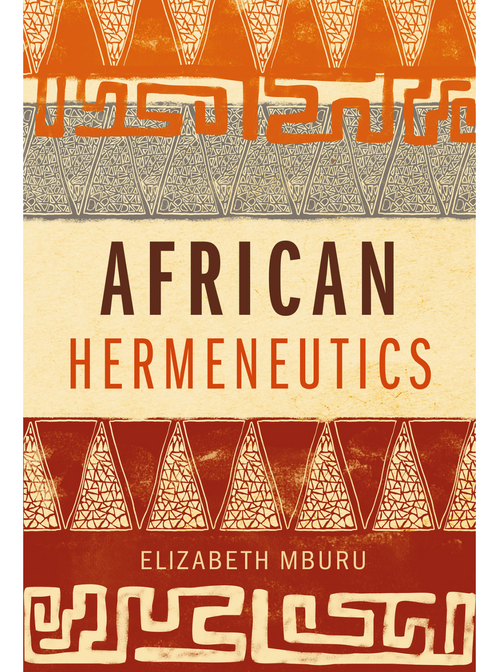
African Hermeneutics

Class Discussion

• Contextual interpretation
• African worldview and Scripture
• Oral tradition and biblical understanding
• Culture and biblical meaning
• Community-centered approaches to interpretation
Session 4 — August 15, 2026
Book Discussion:
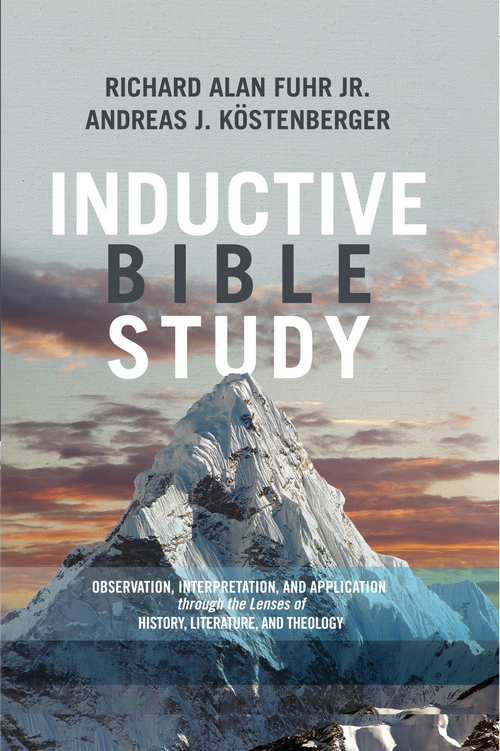
Inductive Bible Study

Class Discussion

• Observation
• Interpretation
• Application
• Literary context
• Historical context
• Methodological discipline in Bible study
Session 5 — August 29, 2026
 Inductive Bible Study Workshop

Class Discussion

• Evaluating interpretive methods
• Applying sound hermeneutical practices
• Reviewing Luke 10:25–37
• Strengthening observation and interpretation skills
• Connecting interpretation and application
Session 6 — September 12, 2026
SESSION 6 — SEPTEMBER 12, 2026

Book Discussion:
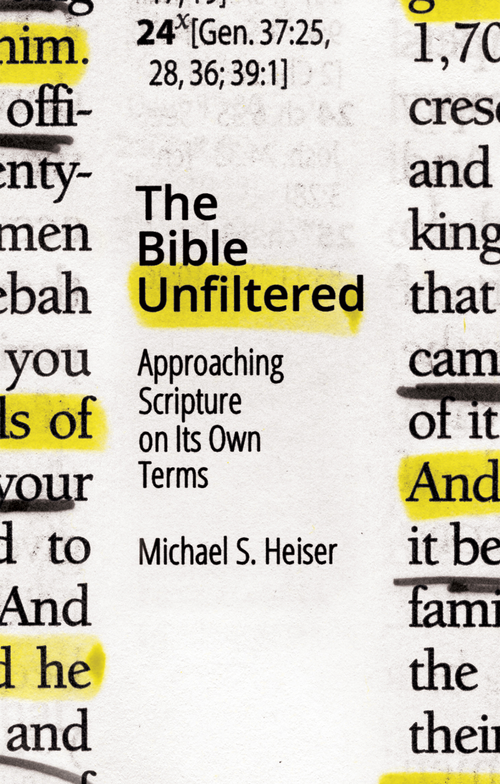
The Bible Unfiltered

Class Discussion

• Ancient Near Eastern worldview
• Spiritual beings and cosmic conflict
• The unseen realm
• Recovering the worldview of the biblical writers
• Implications for biblical interpretation today
Session 7 — September 26, 2026
Integrative Research Seminar

Seminar Focus

• Bringing Felder, Mburu, Fuhr, and Heiser into conversation
• Research development
• Thesis construction
• Peer discussion and feedback

Workshop Topics

• Organizing research
• Developing arguments
• Integrating sources
• Preparing final submissions
Session 8 — October 10, 2026
Final Presentations & Course Completion

Presentation Topics

• Faith and interpretation
• Community and context
• Living in symbiosis with Scripture
• Lessons learned from the course

Certificate Completion Recognition
Course Outcomes

By the conclusion of this course, students will be able to:
•Articulate major themes in African American biblical interpretation.
•Explain the importance of African contextual hermeneutics.
•Employ inductive Bible study methodology.
•Recognize the worldview of the biblical writers and its impact on interpretation.
•Integrate history, culture, method, and worldview into faithful biblical interpretation.
•Demonstrate intellectual rigor and spiritual sensitivity in the interpretation of Scripture

course reading & session material

Stony The Road We Trod

Cain Hope Felder
Needed for session 2
Needed for assignment 1

African Hermenutics

Elizabeth Mburu
Needed for session 3
Needed for assignment 2

Inductive Bible Sudy

Richard Alan Fuhr Jr. & Andreas Köstenberger
Needed for assignment 3

The Bible Unfiltered

Michael S. Heiser
Needed for assignment 4

Reading and Writing Assingments

Assignment 1-Stony The Road We Trod | Due Aug 1, 2026
Book 1: Stony the Road We Trod
Edited by Cain Hope Felder

Learning Goal

To explore how African American Christians have engaged Scripture as a source of survival, liberation, identity, resistance, and hope.

Read

* Introduction
* Chapter 1
* Chapter 2
* One chapter of your choice addressing a biblical text or theme

Key Focus

* African American encounter with Scripture
* The Bible in contexts of oppression and liberation
* Community-centered interpretation
* The role of the Black Church
* Faith and social justice

Reflection Questions

1. How has the African American experience shaped biblical interpretation?
2. What unique insights emerge from African American readings of Scripture?
3. Why has the Bible remained central to Black faith communities despite its misuse by oppressive systems?
4. How does communal suffering influence the way Scripture is read?
5. What can the broader Church learn from African American biblical interpretation?

Written Assignment

Reflection Paper (2–3 pages)

Prompt

How does African American biblical interpretation challenge and enrich traditional approaches to reading Scripture?

Due: August 1, 2026
Assignment 2-African Hermeneutics | Due Aug 15, 2026
Book 2: African Hermeneutics
Elizabeth Mburu

Learning Goal

To understand how culture, worldview, and context influence biblical interpretation.

Read

  • Introduction
  • Chapters 1–4
  • Conclusion

Key Focus

  • Contextual interpretation
  • African worldview
  • Oral tradition
  • Community-centered meaning
  • Cultural location

Reflection Questions

  1. Why does culture matter in biblical interpretation?
  2. How does African Hermeneutics differ from many Western approaches?
  3. What strengths does an African worldview bring to biblical study?
  4. What are the dangers of ignoring context?
  5. How can believers remain faithful to Scripture while acknowledging cultural perspectives?

Discussion Question

Can there ever be a completely objective reading of Scripture? Why or why not?

Written Assignment

Choose a biblical passage and compare:

  • A Western interpretation
  • An African interpretation

Identify the strengths and limitations of both approaches.

Due: August 15, 2026
Assignment 3-Inductive Bible Study | Due August 29, 2026
Book 3: Inductive Bible Study
Richard Alan Fuhr Jr. & Andreas Köstenberger

Learning Goal

To learn a disciplined process of observation, interpretation, and application.

Read

  • Chapters 1–5
  • Observation Sections
  • Interpretation Sections
  • Application Sections

Key Focus

  • Literary context
  • Historical context
  • Repeated themes
  • Structure
  • Application

Reflection Questions

  1. Why is observation the foundation of Bible study?
  2. What happens when interpretation occurs without careful observation?
  3. How does context protect against misunderstanding?
  4. What assumptions do readers often bring to Scripture?
  5. Why is application impossible without proper interpretation?

Practical Assignment

Conduct an Inductive Bible Study on Luke 10:25–37 (The Good Samaritan).

Submit:

  • Observation Notes
  • Interpretation Notes
  • Application Section

Length: 3–4 pages

Due: August 29, 2026
Assignment 4-The Bible Unfiltered | Due September 12, 2026
Book 4: The Bible Unfiltered
Michael S. Heiser

Learning Goal

To recover the worldview of the biblical writers and understand Scripture within its ancient context.

Read

  • Introduction
  • Chapters 1–6
  • Final Chapter

Key Focus

  • Ancient Near Eastern worldview
  • Spiritual beings
  • Cosmic conflict
  • The unseen realm
  • Modern assumptions imposed on Scripture

Reflection Questions

  1. How does the biblical worldview differ from modern Western thinking?
  2. Why does worldview matter for interpretation?
  3. What assumptions do contemporary readers often bring to the text?
  4. How does Heiser challenge conventional readings?
  5. How can understanding the ancient context deepen faith and interpretation?

Written Assignment

Response Paper (3 pages)

Prompt

What aspects of the biblical worldview have been lost in modern Christian interpretation, and why does recovering them matter?

Due: September 12, 2026
Final Research Essay Assignment | Due: TBA
Title

Living in Symbiosis: Reading Scripture Through History, Culture, Method, and Worldview

Prompt

Drawing from Felder, Mburu, Fuhr, and Heiser, explain how faithful biblical interpretation requires attention to community history, cultural context, careful methodology, and the worldview of the biblical authors.

Students must demonstrate understanding of:

• African American biblical interpretation (Felder)
• African contextual interpretation (Mburu)
• Inductive methodology (Fuhr)
• Ancient biblical worldview (Heiser)

Research Essay
5–7 Pages

Due: TBA
Final Presentation | October 10, 2026
🎤 Final Project

Deliver a 5–7 minute teaching or sermon demonstrating:
•Biblical understanding
•Cultural awareness
•Real-life application